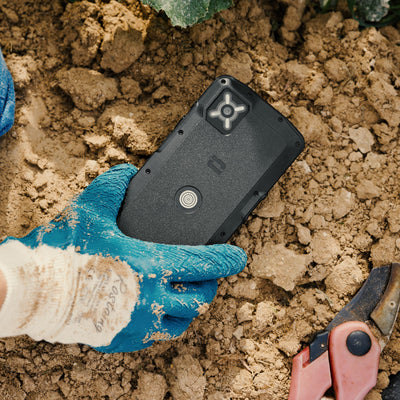
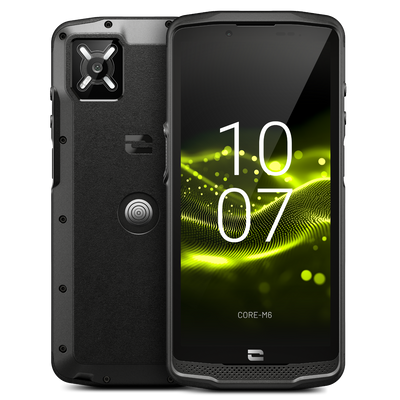
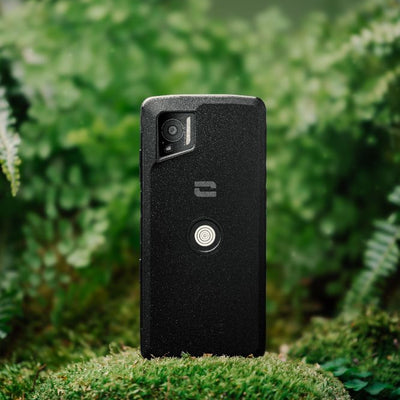
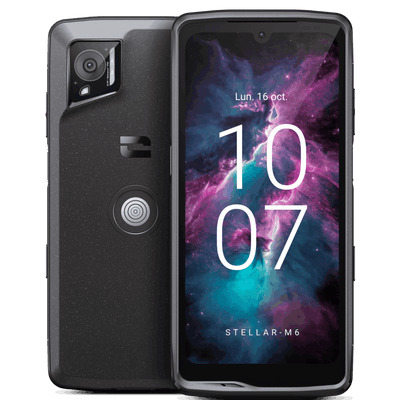

Choosing an outdoor smartphone means choosing equipment that can keep up with your passion and remains reliable even when conditions are extreme.
In this comprehensive guide, we detail the essential criteria to find the outdoor smartphone that matches your activity: battery life, water resistance, drop resistance, GPS, ergonomics… Everything you need to know to make the right choice in 2026.
Table of contents
Why choose an outdoor smartphone rather than a classic smartphone?
Choosing an outdoor smartphone means first and foremost recognizing that your usage conditions exceed what a classic phone can handle.
Steep terrain, heavy rain, extreme cold, isolation: nature sets the rules, and your equipment must respect them. This is why a rugged smartphone for outdoor use is not superfluous but a necessity for demanding users.
Outdoor sports – whether recreational or competitive – naturally take place in environments where conditions are not always 100% predictable. And when faced with the unexpected, the reliability of your equipment often makes all the difference.
These activities sometimes take place alone, in isolated areas, with an unstable or weak network. Under these conditions, precise navigation and staying reachable are safety imperatives.
Added to this is the rise of long outings – such as multi-day treks without access to electricity – which require extended battery life from your smartphone.
In the field, focus is total. The smartphone must be able to fade into the background when not needed and be immediately accessible when necessary – even with gloves, even in the rain, even with one hand.
Finally, and this is no minor detail: outdoor enthusiasts are often committed consumers. As the first witnesses of climate change and attached to their playgrounds, they pay close attention to the environmental impact of the products they use – and to the concrete commitments of the brands they choose.
A classic smartphone is designed for sedentary use in a controlled environment. Powerful, certainly, but energy-hungry, with a battery life that rarely lasts a full day.
Regarding durability, most users end up adding a protective case, a silent admission of its limits. And waterproofing? We’ve all known someone who tried putting their smartphone in rice after dropping it in water… (Spoiler: that method doesn’t work.)
In summary: an outdoor smartphone is designed for places where a regular smartphone simply cannot survive.

Essential criteria for choosing an outdoor smartphone
Outdoor enthusiasts are demanding with their gear – and their smartphone is no exception. The outdoor smartphone must combine absolute reliability, whatever the conditions, with features suited to field use. Here are the criteria to review before choosing your outdoor smartphone.
Battery life:
Better battery life is the primary factor that sets an outdoor smartphone apart from a regular phone. But battery capacity in mAh is not the only indicator to consider.
What really matters is real-world battery life – active GPS, screen on, network in use – not standby time, which is often highlighted in technical specs. A good outdoor smartphone should last more than a full day of active use, to cover long outings without access to a charging source.
Battery longevity over time must also be considered: a quality battery should handle many charge cycles without showing signs of wear, to remain effective for several years.
The best outdoor smartphones offer advanced power management modes – like Crosscall and its Outdoor Mode – with the ability to create a custom power profile, precisely choosing which features to enable or disable to maximize the phone’s battery life.
Finally, some models even have a Power Bank feature to turn your outdoor smartphone into an external battery with wireless charging, to recharge your accessories, for example.
Durability
Many standard smartphones today feature a "designed to last" build, with aluminum cases or reinforced screens. Yet, most users still end up adding a protective case. That says a lot about user confidence…
Without being an unbreakable smartphone, because that doesn’t exist yet, an outdoor smartphone must still offer a certain peace of mind to its user, even without a protective case.
For a truly durable outdoor smartphone, the essential reference is the military standard MIL-STD-810H. It defines a series of standardized tests simulating the most extreme usage conditions, such as resistance to repeated drops on all sides of the phone, as well as to UV and extreme temperatures.
A good rugged outdoor smartphone must therefore exceed these standards: repeated drops on the hardest surfaces, such as concrete, resistance to twisting as if bent in your pocket, and a screen capable of withstanding direct impacts without cracking. These qualities are close to what are more commonly called rugged smartphones.
Regarding temperatures, check that your outdoor smartphone remains operational between -20 °C and +60 °C: enough to accompany you both in high mountains in winter and in the hottest and most humid areas in summer.
Note: cold and heat also affect battery performance — it must be designed to withstand these conditions just like the rest of the device.
Water resistance
Regarding waterproofing, the IP standard is the reference. To be considered a waterproof smartphone, the IP68 level is the minimum standard: it must guarantee complete waterproofing against all liquids (fresh water, salt water, chlorinated water, oils…) for prolonged immersion up to 30 minutes at 2 meters depth, as well as total dust protection.
Some outdoor smartphones go even further with IP69K certification, which adds resistance to high-pressure and high-temperature jets — far beyond a simple shower or a fall in the snow.
A detail often overlooked: after immersion, audio quality can be affected by residual water in the speakers. That’s why some outdoor smartphones include a water expulsion feature for the speakers — like the DryMax system from Crosscall — to immediately restore optimal sound quality.
Ergonomics
In outdoor conditions, ergonomics is not an added comfort — it is a necessity. A good outdoor smartphone must therefore be practical and easy to handle, offering:
- A screen readable in all conditions: in full sunlight, in the rain, or even underwater. Readability takes precedence over raw brightness, which often consumes more energy.
- A screen usable with gloves and underwater: essential for winter sports or heavy rain.
- Accessible and programmable physical buttons, operable with one hand — even with mittens — to quickly launch a key function (navigation, emergency call, camera…).
- A powerful flashlight to support a headlamp.
Network and GPS Connectivity
In isolated areas, connectivity can be a matter of safety. Several points should be checked to choose an outdoor smartphone that keeps you reachable:
On the network: choose a smartphone compatible with 5G. This ensures maximum compatibility with all public frequency bands. Beyond the network standard, it’s the network reception that makes the difference in low coverage areas. Make sure your smartphone performs above average.
Some outdoor smartphones go even further with satellite connectivity, which allows you to stay reachable even in total no-signal zones. The technology is rapidly expanding and is starting to be offered by some operators.
On GPS: in isolated areas with reduced visibility, a few meters of error can make a big difference — especially if you need to be located by a rescue team. A GPS accurate to 5 meters is an essential criterion to fully enjoy your mapping apps and stay on the right route.
Camera and Video
Outdoor practice and photography are inseparable. For an outdoor smartphone with a good photo/video sensor, the 2026 standards are:
- 50 MP wide-angle sensor and 4K video to capture vast spaces, low-angle light, and vivid colors of nature.
- Video stabilization for smooth footage in full motion or on rough terrain.
- Slow motion to not miss any moments at full speed.
- Timelapse to enhance the slowness of nature: sunrise, cloud movement, tide…
- Dashcam mode to continuously film your long outings and keep only the highlights.
- Night mode to capture your evenings at the bivouac or by the fire.
- Underwater photo/video mode for water sports enthusiasts.
Essential outdoor accessories
A high-performance outdoor smartphone deserves accessories that match — durable, waterproof, and designed for the field:
- High-capacity, durable external battery : to double your battery life and set off for several days with peace of mind.
- Bone conduction headset : to enjoy your music or notifications without cutting off from your environment, even in water.
- Durable mounting systems (chest, mountain bike handlebar, backpack…): to keep your map in sight or film first-person, with a mount strong enough not to lose your device in the middle of action.
Which outdoor smartphone to choose based on your activity?
Trail, trekking, and long-distance cycling: priority on battery life and navigation
For outdoor endurance sports, the priority criteria are clear:
- Long battery life for outings lasting several days.
- Accurate GPS for navigation and safety.
- Good network reception to stay reachable.
- MIL-STD-810H resistance to withstand inevitable drops.
- A camera with stabilization : a real plus to capture key moments without stopping.

Sailing, diving, freediving: waterproofing as an absolute criterion
For water sports, IP68 waterproofing is a minimum.
Note however: no current smartphone is designed to withstand the pressures of great depths. We recommend not exceeding 2 meters deep.
Within this limit, the underwater photo/video mode allows you to bring back beautiful memories.
A leash is strongly recommended to avoid losing your device in the open water.

Skiing, mountaineering, snowboarding: water resistance and ergonomics above all
For winter sports, the number one enemy is the cold — and its effects on the battery and screen. Always check the operating temperature range.
Water resistance IP68/IP69K is essential against snow and moisture. A screen usable with gloves and accessible physical buttons save valuable time.
4K video with stabilization and slow motion lets you relive your best sessions.
And a sturdy leash is an essential accessory to avoid losing your phone in the powder after a fall.

Outdoor professionals: operational continuity and safety
Trackers, high mountain guides, rescuers, scientists on expeditions: for professionals working outdoors, the demands are maximal, and smartphone solutions for sports that meet these needs exist.
Priority is given to the highest standards of durability, water resistance, and battery life to ensure operational continuity in all circumstances. Features like a dedicated SOS button or an emergency location system can be critical.
For those operating in white zones — glaciologists, oceanologists, mountain rescue teams — satellite connectivity becomes a full-fledged safety tool.

Outdoor smartphone vs classic smartphone: the complete comparison
Classic smartphone |
Smartphone
|
||||
|
|
|
|||
|
|
|
|||
|
|
|
|||
|
Rarely more than 24h of real use |
Up to 80h of real use, and 100% capacity up to 1000 charge cycles. |
|||
|
Reduced readability in bright light, not usable with gloves or wet hands |
Readable in all conditions, usable with gloves and wet hands | |||
|
|
5G SA with enhanced network reception. GPS accuracy within 5m |
|||
Ergonomics |
|
|
|||
|
2 years | 5 years, battery included |
Our selection of Outdoor smartphones
FAQ about outdoor smartphones
What is the best smartphone for hiking?
The best hiking smartphone combines long battery life (at least 48 hours of real use with GPS active), GPS accuracy within 5 meters, and certified resistance MIL-STD-810H + IP68. Screen readability in bright sunlight and compatibility with offline mapping apps are also key criteria.
What is the best all-terrain smartphone?
An all-terrain smartphone must combine MIL-STD-810H resistance, IP68/IP69K waterproofing, operation between -20°C and +60°C, and battery life far exceeding a day. Choose models that pass all these certifications.
What is the battery life of an outdoor smartphone?
An outdoor smartphone must offer at least 24 hours of active use — GPS on, screen and network in use. The most powerful models reach up to 80 hours of real battery life, enough for several days of outings without a charging source.
What is the most drop-resistant phone?
The most drop-resistant smartphones are certified MIL-STD-810H and tested with repeated drops from 2 meters on all sides of the phone and hard surfaces like concrete.
What is the difference between an outdoor smartphone and a regular smartphone?
A regular smartphone is designed for sedentary use in a controlled environment. An outdoor smartphone withstands drops, extreme temperatures (-20°C to +60°C), water immersion, and dust — with much higher battery life and durability.
What is the lifespan of an outdoor smartphone?
An outdoor smartphone is designed to last 5 years or more under real intensive use. The best brands like Crosscall offer a 5-year warranty, battery included — for extended lifespan and reduced environmental impact.