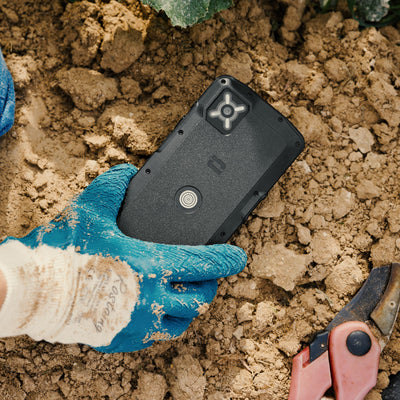
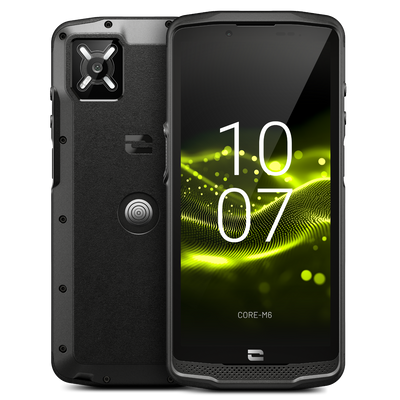
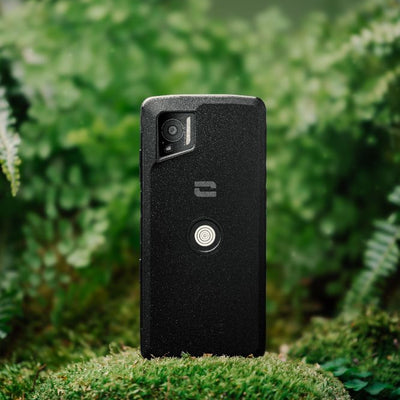
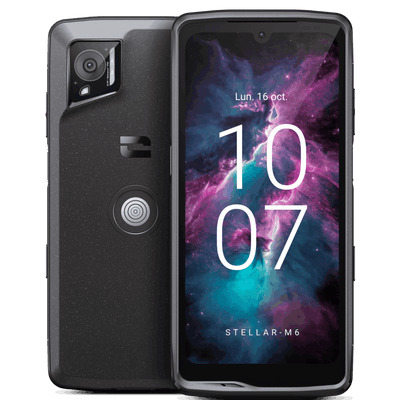
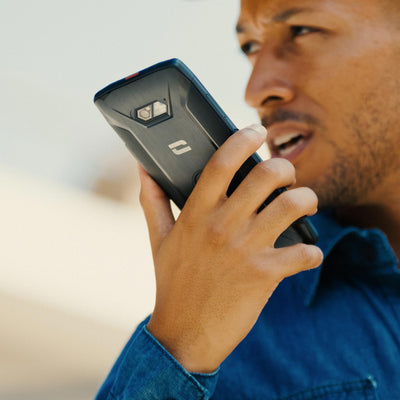
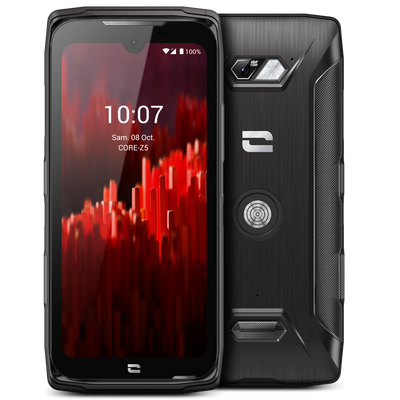

The business smartphone is now established as the primary work tool for Frontline Workers—field employees who are often the least well-equipped despite making up a significant share of the workforce.
Scanning a package, taking a customer's payment, or running a business application: mobile use goes beyond simple communication, making the mobile fleet a true productivity tool and a source of efficiency, versatility and security.
But choosing the right smartphone remains complex: opting for the cheapest model often hides a higher total cost of ownership (TCO), while an unreliable fleet undermines efficiency in the field.
This guide gives you the keys to understanding, structuring and optimizing the management of your business mobile fleet: definitions, challenges, selection criteria, MDM solutions, Android Enterprise certifications and total cost of ownership.
Table of contents
What is a business mobile fleet?
A business mobile fleet comprises all the mobile devices (smartphones, tablets, accessories) deployed and centrally managed to equip employees as part of their professional activities.
Which professions?
Historically intended for executives and sales staff, business smartphone fleets now primarily serve Frontline Workers—employees who work away from an office, on the move and as part of a team, in the field:
- Logistics and transport (drivers, delivery workers, dock workers)
- Retail and distribution (sales assistants, order pickers)
- Industry (production operators, maintenance technicians)
- Construction and building (site managers, workers)
- Healthcare (home healthcare workers, paramedics)
- Agriculture
- Outdoor sports and leisure
- Security and emergency services (security officers, firefighters)
- Local authorities and public services

What are they used for?
In addition to voice and data communications, these employees use business applications every day: reporting field information, geolocation, barcode scanning, form entry, taking photos for service reports, and viewing purchase orders or service forms.
These use cases take place in demanding environments (bad weather, impacts, drops, long workdays) with intensive handling, as with Push-to-Talk use cases.
Who manages the mobile fleet?
Mobile fleet management varies according to the organization’s size and digital maturity:
- In small businesses (very small and small-to-medium-sized enterprises), it is often the managers themselves who oversee equipping their teams, looking for reliable equipment that is simple to deploy and immediately effective in the field—without unnecessary complexity.
- In larger companies, the IT department provides advanced technical expertise (hardware and software): compatibility with MDM (Mobile Device Management) solutions, integration with the business application ecosystem, data security, and compliance with Android Enterprise Recommended (AER) certifications.
- The Procurement or General Services department focuses on another area: controlling costs and maintaining the fleet, with a priority on responsive after-sales service and strong warranty terms to ensure controlled TCO over the long term.
This diversity of user profiles explains why choosing a business smartphone cannot be reduced to a simple technical specification sheet: it must simultaneously address field-use requirements, IT security, and budget management, often handled by different stakeholders within the same organization.

The essential criteria for choosing a business smartphone
Choosing a business smartphone has nothing to do with choosing a consumer smartphone. Selection criteria must meet specific, field-based, intensive, and sometimes extreme use cases, while remaining reliable and high-performing over time, regardless of which employee uses it or how they use it within the organization.
Durability
Robustness is measured against precise standards, not marketing claims. Three benchmarks are worth knowing:
- MIL-STD-810H military standard : it tests resistance to shocks, vibrations, extreme temperatures, and humidity. A compliant smartphone must survive repeated drops. Our rugged smartphones are tested with repeated drops onto all 6 faces from heights of up to 2 meters.
- IK rating : this standard specifically measures resistance to impacts on the screen, an essential criterion that should not be overlooked, as broken screens are the leading reason for after-sales returns of professional smartphones.
- Operating temperature range : a rugged professional device must remain fully operational in the most challenging outdoor conditions, as well as in extreme industrial environments (cold rooms, boiler rooms, etc.). An ideal range is between -20°C and +60°C.
Since 2025, a drop-resistance rating, graded from A to F, has also appeared on the new energy labels required by the European Union. All our models are rated A.
Water resistance
The IP68 ratings (dustproof and resistant to liquids during prolonged immersion) and IP69K ratings (high-pressure, high-temperature spray resistance) are essential whenever the device is used outdoors or in a humid environment.
It is also important to check that this water resistance has been validated for all types of liquids, not just fresh water: salt water, chlorinated water, as well as oils and other industrial liquids.

All Crosscall models are tested during prolonged 30-minute immersions at a depth of 2 meters, and in all types of liquids.
Battery life
A technician working in the field or a security guard on a 12-hour shift cannot depend on recharging during the day. Battery life measured in real-world use, rather than standby, is often overlooked when making a purchase, yet it is crucial in the field.
Prioritize long battery life in real-world use: over 24 hours is still the bare minimum, but it is better to aim for several days of battery life. Our smartphones offer up to 80 hours of real-world battery life.
Warranty
The warranty period is a direct indication of the manufacturer’s confidence in the durability of its equipment. A 2-year warranty is the legal minimum; a 5-year warranty, including the battery, demonstrates a much stronger commitment to the device’s actual reliability and longevity; a key criterion for reducing the TCO of your fleet.
Integrated accessories and services ecosystem
Choosing a professional smartphone does not stop at the device itself. The ecosystem of accessories and services that accompanies it is equally decisive when managing a mobile fleet.
Accessories designed for ergonomics and business continuity
Some accessories make everyday work easier for employees in the field: body-worn attachment systems (holsters, vest clips), vehicle mounts, “multi-device” charging stations, or data transfer solutions. They do not transform how the smartphone is used, but they ensure it remains accessible and permanently available, without service interruptions or lost time in the field.
Modules that transform the smartphone into a true business tool
Other accessories go further: they literally transform how the device is used, replacing a standalone work tool. A scanner module, for example, can turn a smartphone into a professional handheld barcode scanner. As a result, a single device supports two distinct uses, considerably simplifying fleet management and reducing overall hardware investment accordingly.
Integrated services for easier integration
Finally, some professional services directly integrated into the smartphone make it easier to deploy new business applications in the company’s workflow, without having to worry about device compatibility. This approach enables IT teams to evolve fleet usage without multiplying devices or technical constraints.
This ecosystem approach fully embraces modularity and versatility: a single smartphone can thus replace several different devices, making the fleet easier to manage, more cost-effective, and more sustainable over time.

Repairability and availability of spare parts
A professional smartphone should be repairable, not simply replaced. The indicators to check are:
- Availability of spare parts (screen, battery, connectors)
- Availability of a local after-sales service capable of handling repairs quickly
- Design modularity (standardized parts, easier disassembly)
Since 2025, the European Union has required manufacturers to keep spare parts available for 7 years after the model’s release date. At Crosscall, this period is extended to 10 years.
All our smartphone and tablet models have a repairability score of A or B, among the best scores on the market.
Software update policy
An unupdated smartphone is a security vulnerability waiting to happen. Check:
- The number of years of guaranteed major Android updates
- The frequency of security patches
- The manufacturer’s transparency regarding its software roadmap
Since 2025, Europe has required a minimum of 5 years of software support for security and feature updates. At Crosscall, this period is extended to 7 years, subject to compatibility with future Android versions.
Android Enterprise compatibility
The smartphone must be Android Enterprise Recommended certified, guaranteeing compatibility with the fleet management solutions available on the market (see the dedicated section below).
MDM compatibility
If you have a large fleet, the device must be compatible with the main Mobile Device Management solutions (SOTI MobiControl, Microsoft Intune, VMware Workspace ONE…) so that fleet management can be centralized through a single solution. (see the dedicated section further down in the article)
Summary of selection criteria
|
|
|
|
|||
|
Ruggedness
|
|
|
|||
Water resistance |
|
|
|||
Battery life |
|
|
|||
Repairability |
|
|
|||
Warranty |
|
|
|||
|
|
|
|||
|
|
|
|||
|
|
|
|||
|
Compatibility with the market’s leading solutions |
Centralize mobile fleet management |
Why choose a certified Android Enterprise Gold Partner?
Android Enterprise is Google's official program dedicated to professional Android use. It provides a set of APIs and standards that enable companies to deploy, configure, and secure Android devices at scale and consistently, regardless of the manufacturer.
In practical terms, Android Enterprise provides:
- Simultaneous remote deployment
- Separation of professional and personal data
- Enhanced data protection and privacy
- Centralized management of updates and applications
Google distinguishes several levels of partnership for manufacturers. Gold Partner status is reserved for manufacturers that demonstrate a strong and ongoing commitment to the compatibility, security, and long-term support of their devices—a level of requirement above basic certification.
Crosscall is an Android Enterprise Gold Partner. In practical terms, this means that our devices are designed, tested, and maintained to ensure lasting compatibility with fleet management tools, and that we work directly with Google on the evolution of our products.

What is an MDM?
An MDM (Mobile Device Management) is software that enables a company to remotely manage its entire fleet of mobile devices: configuration, application deployment, updates, security restrictions, geolocation, and remote wiping in the event of loss or theft.
For example, an MDM can:
- Automatically deploying business applications to each new device
- Enforcing security policies (passwords, encryption, VPN)
- Monitoring fleet status in real time (battery, location, software version) and being able to carry out repairs or updates remotely
- Locking or wiping a lost or stolen device
- Restricting device use to certain applications (kiosk mode)
Some of the most widely used solutions on the French market include SOTI MobiControl, Microsoft Intune, and VMware Workspace ONE.
Crosscall smartphones are compatible with the vast majority of MDM solutions on the market. In particular, we maintain a close technical partnership with SOTI, a leading provider, to ensure seamless integration and responsive technical support for our customers deploying this solution.
What is the true cost of mobile fleet management?
The purchase price of a smartphone represents only part of its total cost of ownership. The following cost categories should be included in a rigorous TCO calculation over a 5-year reference period (the standard Crosscall warranty period):
|
|
|
||||
Breakage |
|
|
||||
|
|
|
||||
|
|
|
||||
|
|
|
||||
|
|
|
||||
|
|
|
Why choose Crosscall for your mobile fleet?
Crosscall designs rugged professional smartphones built to meet the demands of businesses operating in the most challenging environments:
- Certified ruggedness beyond traditional military standards: resistance to repeated drops of up to 2 meters, operating temperatures from -20°C to +60°C
- IP68 / IP69K water resistance, suitable for damp and dusty environments and prolonged immersion in all types of liquids
- Up to 80 hours of real-world battery life for certain models, designed for jobs involving continuous mobility
- 5-year warranty, battery included which directly reflects our confidence in the durability of our products
- Android Enterprise Gold Partner certification and broad compatibility with the leading MDM solutions on the market
- Versatile use : our devices can replace several pieces of equipment (fixed workstation with X-Space, PTT radio, barcode scanner with X-Scan), reducing the number of devices to manage
- Local support in France : X-LAB R&D, dedicated technical support, and responsive after-sales service. A tailored approach adapted to the constraints of each sector
- A sustainable French brand, with a long-term commitment to repairability and spare-parts availability
- Extended lifespan for a lower TCO. The 5-year warranty, including the battery, means less breakage, fewer replacements, and lower maintenance costs.
Our customers report a significant reduction in their breakage rate and easier deployment after switching to a Crosscall fleet. Discover their testimonials.
FAQ
What is a mobile fleet?
A company's mobile fleet is the set of mobile devices (smartphones, tablets) deployed and centrally managed to equip employees for their professional work.
Which smartphone should you choose for a mobile fleet?
The choice depends on actual usage conditions: an office environment or field conditions involving exposure to shocks, water, dust, and extreme temperatures. In the latter case, choose a rugged smartphone certified to MIL-STD-810H and IP68/IP69K.
What is an MDM?
An MDM (Mobile Device Management) is software for the centralized, remote management of mobile devices: application deployment, security, updates, geolocation, and more. It is an essential tool for IT teams managing large fleets of professional mobile devices.
What is the average lifespan of a professional smartphone?
It ranges from 2 to 3 years for a consumer smartphone in intensive use, compared with 5 years or more for a rugged smartphone backed by a warranty and a suitable spare-parts policy, as offered by Crosscall.
How can you reduce the costs of a mobile fleet?
By reducing the breakage rate with a rugged smartphone model, standardizing the fleet (one model, one OS), centralizing management and maintenance via an MDM, and planning investment based on TCO rather than just the unit purchase price.
Which professions use a mobile fleet?
Logistics and transport, retail, industry, construction, healthcare, security, agriculture, local authorities. All professions involving field mobility and the use of voice and data communications in their work.