
Setting out for a hike at sunrise, covering kilometers on a trail, camping for several days far from civilization... When you live your passion in the great outdoors, the last thing you want is to keep an anxious eye on your smartphone's battery level.
It's a matter of freedom, of course. But also, and above all, of safety. In the natural environment, the smartphone is much more than a comfort tool: it is your link to your loved ones, your way to be located and to send an alert if conditions worsen.
Yet, when choosing their phone, many outdoor enthusiasts put battery life second. A mistake that can be risky, since lbattery life of an outdoor smartphone is generally between 48h and 80h in real use. In extreme conditions (cold, active GPS, weak signal), a regular smartphone can drain in a few hours, while an outdoor model is designed to last several days depending on use.
Discover our tips to fully understand battery life in outdoor conditions, as well as our selection of outdoor smartphones.
Why is battery life a key factor in outdoor activities?
Since 2020, outdoor activities have seen significant growth in France: according to the study Ipsos - BVA "The Outdoor Boom" (2024), walking and hiking are the most popular activities, practiced by 73% of French people. Road cycling or hybrid biking comes second, practiced by 31% of French people. Finally, running, practiced by 28%, rounds out the podium of French people's favorite outdoor activities.
And for all these activities, the smartphone has become a full-fledged outdoor companion.
Outdoors, your phone is no longer just for making calls. It serves many different purposes, all of which consume a lot of energy:
- Route planning and navigation with apps like Visorando or AllTrails, which continuously use GPS and the screen.
- Performance tracking and community sharing via Strava or Running Heroes, with real-time data recording.
Often added to this are connected peripherals — GPS smartwatches, wireless earbuds, heart rate sensors — that maintain permanent Bluetooth connections with your smartphone.
But beyond comfort, the smartphone has become the main safety tool for outdoor athletes. It is now the most reliable mainstream way to be located in case of trouble, to stay in touch with a loved one or safety contact, send an emergency message, or trigger an automatic geolocation beacon. These functions require being constantly connected to the network, even in remote areas where the signal is weak — which, as we will see, is particularly energy-consuming.
Finally, the very nature of outdoor activities imposes constraints that everyday smartphones are simply not designed to handle: entire days away from any power outlet, multi-day treks or camping trips, and sometimes extreme weather conditions — severe cold, heatwaves, rain, altitude — that weaken the battery as much as they strain the phone.
The battery life of an outdoor smartphone is therefore not just a comfort criterion: it is a matter of safety.
Our selection of Outdoor smartphones
What consumes the most battery outdoors
Cold and extreme weather conditions
This is one of the most underestimated phenomena by outdoor enthusiasts: temperature has a direct and immediate impact on your battery's performance. The lithium-ion batteries that power our smartphones operate optimally between 15 and 35°C. Outside this range, things get complicated.
In cold weather — from -5°C — the electrochemical reactions inside the battery slow down. Practically, your battery seems to drain much faster, and your phone may shut down suddenly even when it still shows 20% charge. This phenomenon is reversible: the battery regains its normal capacity once it returns to room temperature. But in the middle of the mountains, that’s not really an option.
Conversely, extreme heat — during a summer hike or a trip in a desert environment — causes irreversible chemical degradation of the battery. Each prolonged exposure to temperatures above 40-45°C permanently reduces the battery’s maximum capacity. In other words, your smartphone permanently loses battery life, outing after outing.
That is why outdoor smartphones must include batteries and thermal architectures capable of operating within much wider temperature ranges — ideally from -20°C to +60°C — to guarantee real battery life in all conditions.
GPS navigation
GPS is one of the most energy-consuming features of your smartphone.
Contrary to what one might think, it is not the act of "receiving" a signal that consumes power, but the continuous calculation of your position, map updates, and the constant communication required.
However, it is hard to imagine going without GPS on an outing when it can be a real safety net.
The challenge is therefore to choose an outdoor smartphone with a battery sized to handle this consumption over time, and software optimized to efficiently manage this type of energy use.

Network connection in isolated areas
When your smartphone is in a low network coverage area, it does not remain passive. It frequently sends signals to try to connect to a tower — these are called network "pings." This repeated cycle is particularly energy-consuming.
In mountain areas, dense forests, or remote countryside, this phenomenon can multiply consumption. And since staying connected is essential for your safety outdoors, simply turning off mobile data is not an option. Again, the battery life of your outdoor smartphone must be sufficient to handle this overload.
Photography and video in outdoor conditions
Outdoor landscapes make you want to capture everything. And using the camera outdoors has a significant impact on your battery life, for several reasons.
Outdoor lighting conditions such as backlighting or low light put more strain on the processor and screen, and can use significant resources.
Advanced video modes like slow motion or timelapse are also very demanding, as they require intensive image processing in near real-time.
And if you have enabled automatic cloud backup or instant sharing on social networks, each photo or video will trigger mobile data transmission — with all that implies in terms of network and battery consumption, especially in low-signal areas.

Best practice: disable automatic backup before going out, and perform your synchronizations once back home, using your WiFi connection.
Fall and immobility detection : in case of loss of verticality or sudden fall
Real-time location sharing : to be located instantly by the team or emergency services
Dedicated SOS button : accessible even with gloves or dirty hands
Automatic emergency call : triggered in critical situations
The smartphone is no longer just a communication tool: it becomes a true safety device, watching over the worker throughout their day.
Why doesn’t a typical smartphone last outdoors?
The consumer smartphone is designed for comfortable conditions: constant network access, ambient temperatures, and above all a power source within reach to recharge at least once a day.
Its philosophy is that of instant power: ultra-fast processors, very bright OLED screens, resource-intensive software architectures to run increasingly demanding applications.
This power at the exact moment comes at the expense of long-term resilience. Outdoors, where all applications run simultaneously at full capacity — GPS, network, screen, Bluetooth — the battery of a typical smartphone drains in a few hours.
By contrast, an outdoor smartphone is designed with a long-term energy efficiency philosophy: it optimizes the consumption of each component, intelligently manages background resources, and offers much finer configuration options than the simple basic "power saving mode".
The battery issue goes beyond immediate battery life. Regular smartphones are often charged once a day. Yet, each charge cycle reaching 100% accelerates battery degradation. After 300 to 500 cycles — about one to two years of intensive use — the battery holds only a fraction of its original capacity. These batteries are often designed to last only the 2-year manufacturer warranty period.
Outdoor smartphones, on the other hand, come with batteries designed to withstand 1,000 full charge cycles while maintaining 100% of their performance. And at Crosscall, this battery is included in the 5-year manufacturer warranty.
Finally, the weather conditions to which an outdoor smartphone is exposed — cold, rain, humidity — pose a direct threat to the physical integrity of the battery.
Moisture seeping into a non-waterproof casing can cause internal short circuits or corrosion on battery connectors.
Severe cold can accelerate their aging irreversibly. A regular smartphone, not IP68 or IP69K certified, is simply not designed to withstand these aggressions.
A battery that drains faster in extreme conditions, in a phone that is not protected against those same extreme conditions: this is a double risk for your safety outdoors.
The outdoor smartphone solves both problems at once: better battery life, a battery resilient to temperatures, ultra-resistant and waterproof casing, for total availability in any condition.
What real battery life can you expect from an outdoor smartphone?
Not all battery lives are equal. Between the figures announced by manufacturers and the reality on the ground, the gap can be considerable. Here are the 4 concrete criteria to demand from your next outdoor smartphone:
1. Long battery life in real use
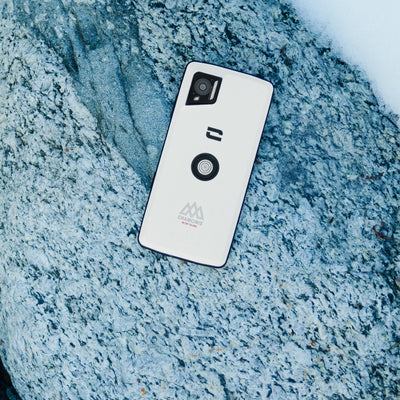
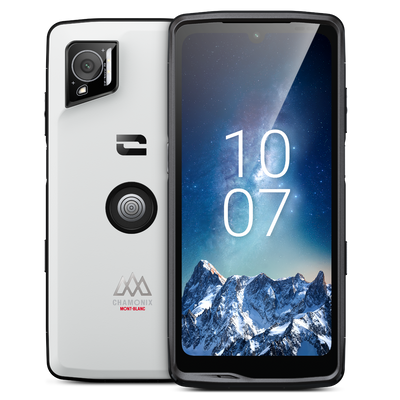
This is the number one criterion. Not standby battery life: the battery life under real usage conditions indicated on the “energy label” that sets measurement standards at the European level. For total comfort on outings of 2 days or more, aim for at least 48 hours of real battery life. Some outdoor smartphones like the Crosscall STELLAR-X5s Chamonix-Mont-Blanc Edition reach 54 hours of real usage battery life, giving you a comfortable safety margin.
2. Personalized battery settings
Far beyond the classic power-saving mode that limits all your phone’s functions, a good outdoor smartphone should allow you to finely customize your power profile. The idea: only use the energy you really need at each stage of your outing. For example, Crosscall offers a dedicated Outdoor Mode that lets you suspend non-essential notifications, customize your power profile, and gain up to 25% more battery life without sacrificing essential functions for your outing.
3. Long-term battery efficiency
A battery must last not only for one outing but for several years of intensive use. The number of charge cycles is the key indicator: aim for at least 1,000 full charge cycles before performance degradation. This is more than double what most regular smartphones offer. It guarantees reliable battery life over 4 to 5 years of regular use.
4. The battery included in the manufacturer’s warranty
The battery is not always included in standard warranties, considered a consumable part. Yet, it is the most critical component of your outdoor smartphone. Crosscall offers a 5-year warranty on all its smartphones, including the battery up to the 1,000th charge cycle. A warranty almost unique on the market, which says a lot about the confidence we have in the durability of our products.
How to optimize the battery life of your Outdoor smartphone?
The best outdoor smartphone in the world will never replace good usage habits. Here are 5 tips to preserve your battery and maximize your battery life on outings.
1. Keep a charge between 20% and 80%
Letting your battery drop to 0% or always charging it to 100% are the two most common and damaging mistakes for your battery’s longevity. These two extremes cause electrochemical stress that accelerates cell degradation. To preserve your battery over time, charge it occasionally and avoid exceeding 80%. Enable battery percentage display in your settings to keep a precise eye on your charge level throughout the day. A setting is also available to stop your charging cycles automatically at 80% battery capacity.
2. Use automatic brightness management
The screen is one of the most power-consuming components of your smartphone. Outdoors, under the sun, the instinct is often to set brightness to maximum to stay readable. But keeping brightness at 100% all the time can represent a significant part of your total consumption. Enable automatic brightness management in your display settings: your phone will intelligently adjust brightness based on ambient light, for optimal reading comfort without wasting energy unnecessarily.
3. Close background apps and activate battery saver
Most smartphones offer a battery saver mode that reduces processor performance, limits background refreshes, and adjusts certain display settings. Set it to activate automatically as soon as your battery reaches 20% — giving you a comfortable safety margin. Also take this opportunity to identify and disable the most power-hungry apps you won’t need during your outing from the Outdoor Mode.
4. Turning off your smartphone at night or activating airplane mode
Whether camping or on a hiking trip, nighttime is the best time to avoid wasting battery life. Turning off your smartphone completely or activating airplane mode cuts all network connections and stops all background activities. Over an 8-hour night, this can represent valuable preserved battery life for the next day.
Crosscall solutions to maximize battery life
Outdoor Mode: keep control of your energy
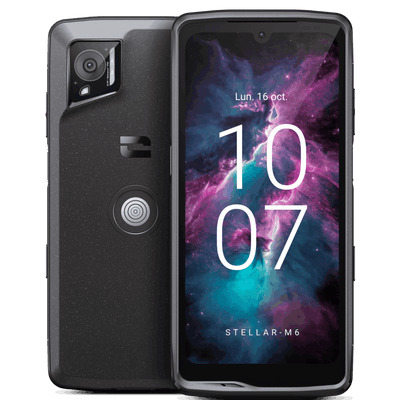
On long outings, every percentage of battery counts. The Outdoor Mode from Crosscall — available exclusively on the STELLAR-X5s and the STELLAR-M6 Chamonix-Mont-Blanc Editions — is designed to give you control over your energy consumption without sacrificing your safety.
- Temporarily suspend non-essential notifications to focus your resources on what really matters.
- Customize your energy profile to gain up to 25% extra battery life.
- Set up automatic location sharing with your emergency contacts, even without mobile data.
The Outdoor Mode is not just a simple power-saving mode: it’s a true smart battery management tool, designed by and for outdoor enthusiasts.
High-capacity battery: uncompromised battery life
All Crosscall smartphones come with high-capacity batteries sized for long outings, with real battery life exceeding 48 hours and reaching up to 80 hours depending on the model and usage.
- 100% performance maintained over 1,000 full charge cycles.
- Battery designed to operate from -20°C to +60°C without significant capacity loss.
- 5-year warranty, battery included, a first on the market
X-POWER accessories and X-LINK connectivity: double your battery life without waste
For the longest expeditions, Crosscall offers the X-POWER: an ultra-durable external battery with IP68 certified waterproofing, capable of doubling your smartphone’s battery life. Drops, rain, dust: the X-POWER is designed to withstand as much as your phone.
All Crosscall smartphones are also equipped with the proprietary X-LINK connection, which ensures energy transfer at 98% efficiency — meaning almost no loss between the charging source and your battery.
Our selection of accessories for Outdoor Smartphones
FAQ: outdoor smartphone battery life
What is the best battery life for an outdoor smartphone?
For intensive outdoor use, aim for at least 48 hours of real-world battery life — with GPS active, network in use, and outdoor apps open. For multi-day trips or self-supported treks, models like the Crosscall STELLAR-X5s offer up to 54 hours of real battery life, giving you a comfortable safety margin for 2 to 3 days out.
Why does my smartphone battery drain so quickly on a hike?
On a hike, several factors add up to drain your battery much faster than in everyday use: GPS active constantly, network searching in isolated areas which heavily uses the antenna, screen on to display maps, and sometimes cold temperatures that reduce battery capacity. A regular smartphone is not designed to handle this combination of factors over several hours.
Does cold really drain a smartphone battery?
Yes, and very significantly. Below 0°C, lithium-ion batteries see their performance drop drastically: the phone can shut down suddenly even though it still shows charge. In the long term, repeated freeze-thaw cycles irreversibly damage the cells. Outdoor smartphones are specifically designed to operate down to -20°C without performance loss.
How to save your smartphone battery in the mountains?
Five key habits: keep your charge between 20% and 80%, enable automatic brightness control, close unused background apps, activate airplane mode at night, and if your smartphone offers it, set up a custom outdoor mode to optimize your consumption by keeping only the functions essential to your activity and safety active.
Does an outdoor smartphone really have better battery life than a regular smartphone?
Yes, and not just because it has a larger battery. An outdoor smartphone is designed with an energy efficiency philosophy: software optimization, precise management of active modules (GPS, network, Bluetooth), and batteries sized for continuous intensive use. With the same battery capacity, an outdoor smartphone will last significantly longer in outdoor conditions than a consumer smartphone.
Can you charge an outdoor smartphone with a regular external battery?
Yes, via standard USB connectors. But Crosscall smartphones go further with the proprietary X-LINK connection, which offers 98% energy transfer efficiency from compatible Crosscall accessories like the X-POWER. This means almost no energy loss during charging — a real advantage when every percentage counts in the great outdoors.
What is the lifespan of a Crosscall outdoor smartphone battery?
Crosscall batteries are designed to maintain 100% of their performance for 1,000 full charge cycles, which is about 3 to 5 times more than a typical smartphone battery. They are fully covered by the 5-year manufacturer warranty — a Crosscall exclusive on the market.