GAMME STELLAR

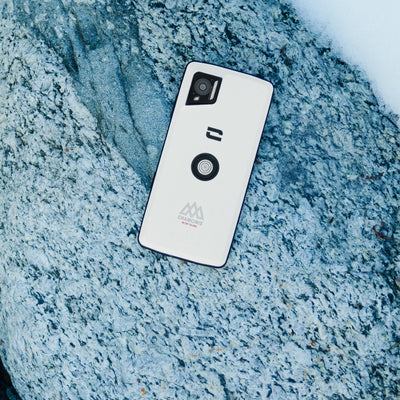
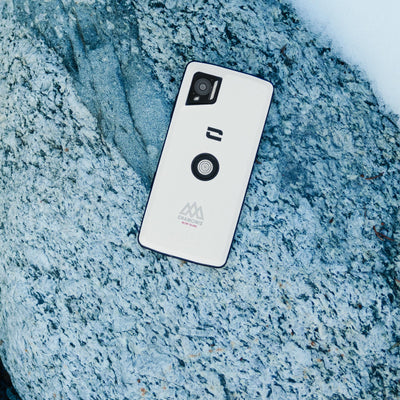
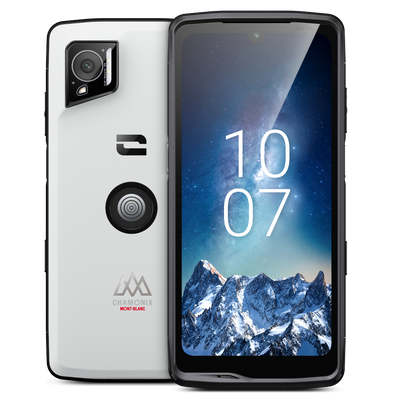
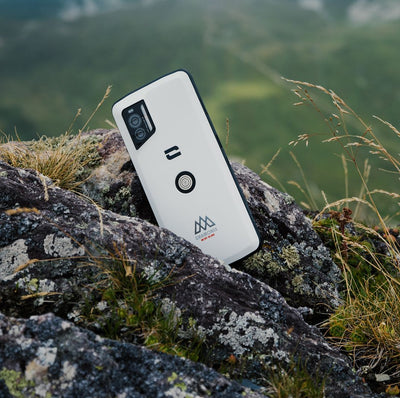
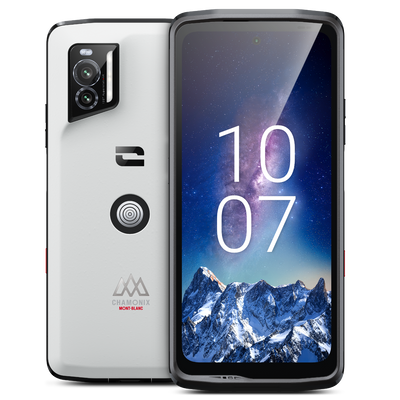
édition chamonix-mont-blanc

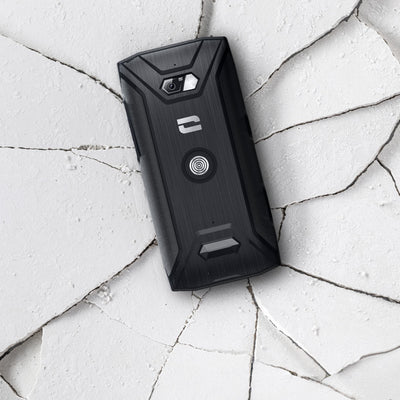
STELLAR-M6

Chamonix-Mont-Blanc edition

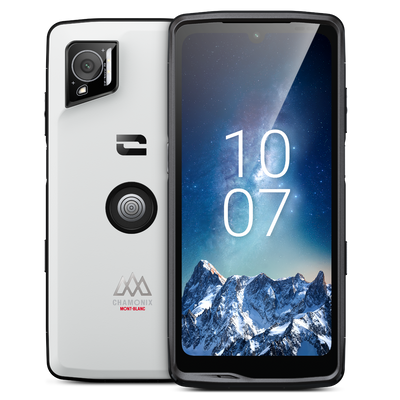
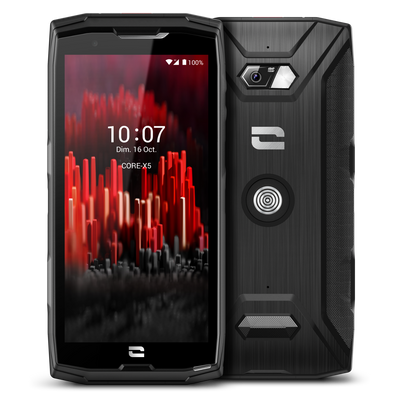
LE STELLAR-X5s
chamonix-mont-blanc
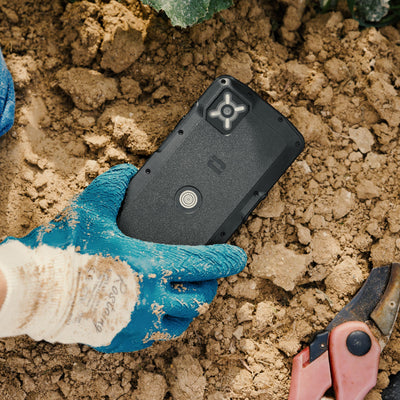
dans son élément


UNE ROBUSTESSE TESTÉE ET PROUVÉE

Découvrir

étanche tous liquides
30 min jusqu'à 2 mètres

Découvrir

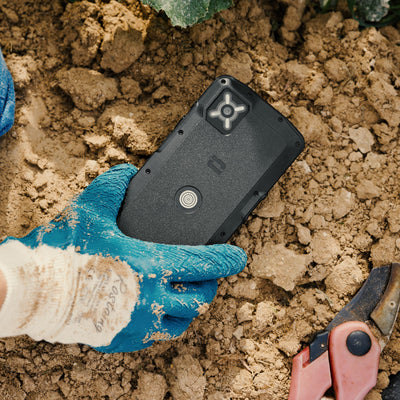
mode outdoor
jusqu'à +25% d'autonomie

Découvrir

The Selection of the Moment

From €14.27/month €20 discount
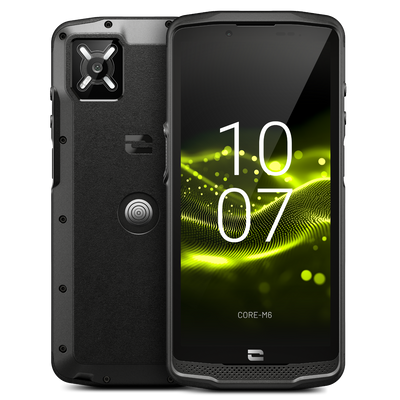
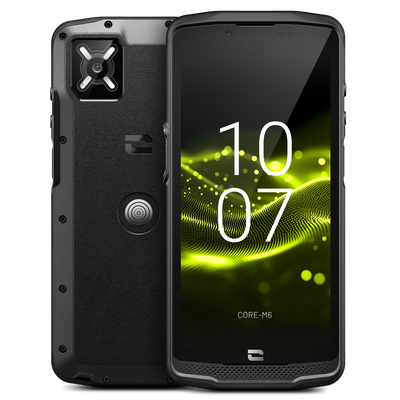
CORE-M6
CORE-M6
Discover

Exclusive X-TREMESHIELD structure

Total waterproofing IP68 / IP69K

3 programmable buttons: SOS, AI & PTT

 
319,90€ 299,90€
From €19.03/month €100 discount
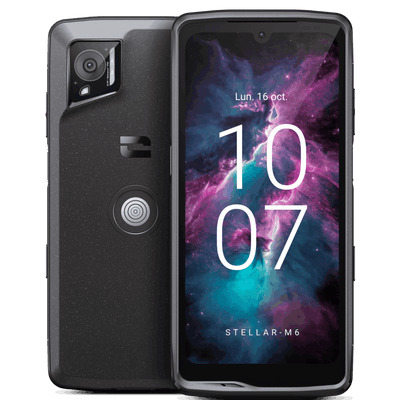
STELLAR-M6
STELLAR-M6

3 customizable action buttons, 1 SOS button

5G, Wifi6/6E, X-LINK, X-SPACE

Biometric security for sensitive data

 
499,90€ 399,90€
From €14.82/month €50 discount
STELLAR-X5s Chamonix
Discover

IP68, saltwater, dust

Outdoor mode: up to +25% more battery life

Resistance to repeated drops

 
699,90€ 649,90€
From €19.03/month €100 discount
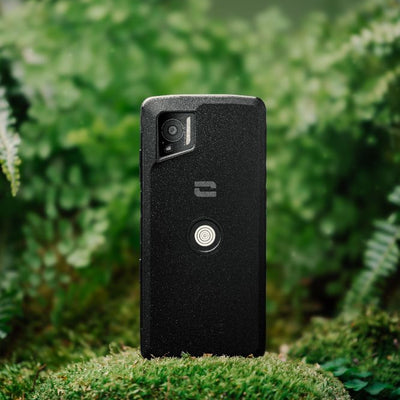
STELLAR-M6 Chamonix
STELLAR-M6 Chamonix

Outdoor mode: up to +25% more battery life

IP68, saltwater, dust

Resistance to repeated drops

 
499,90€ 399,90€
VOIR TOUTE LA Sélection
All products

The Crosscall Commitments

When it comes to sustainability, it’s not words but actions that make the difference. So we took action.


Phones resistant to all challenges

Learn more

A 5-year warranty, unique on the market

Learn more

Designed to last, made to be repaired

Learn more

What
customers say

0/5
Chargement...
All reviews

The latest news...

IP68 : qu'est-ce que c'est et que garantit vraiment cette norme ?

IP68: What Is It and What Does This Standard Really Guarantee?

IP68: understanding what your smartphone’s waterproofing guarantees  IP68 has become a key selling point in the smartphone market. Manufacturers don’t hesitate to showcase their devices in the rain, splashed, or briefly submerged in water to demonstrate their durability. But what happens when a phone falls into the sea, stays underwater for a long time, or is exposed to large amounts of dust? The reality is often more nuanced than marketing demonstrations. The IP68 rating is a certification that measures a device’s level of protection against dust and water. More precisely, it indicates that a smartphone is fully protected against dust ingress and can withstand prolonged immersion. But what does this standard really guarantee? What are its limits in everyday situations? And how does it differ from other certifications like IP67 or IP69? Here’s everything you need to know before choosing an IP68-certified smartphone.  Table of contents IP68: understanding what your smartphone’s waterproofing guarantees  What does the IP68 standard mean? Decoding the symbol: IP, 6 and 8 IP68 vs IP67: what is the difference? IP68 vs IP69K: what is the difference? Specifically, what can an IP68 device withstand? What the IP68 standard does NOT guarantee Why do professionals seek IP68? Is IP68 the only robustness standard? How to preserve the waterproofing of an IP68 smartphone? What to do if an IP68 phone gets wet? Key points Our selection of IP-certified phones: product grid FAQ: frequently asked questions about IP68 What does the IP68 standard mean? The IP68 standard certifies that a device is completely protected against dust and can withstand prolonged immersion in water, under conditions defined by the manufacturer, according to the IEC 60529 standard of the International Electrotechnical Commission. It is now the reference standard for waterproof smartphones intended for demanding use. Specifically, theIP rating breaks down as follows: IP67 : completely dust-tight, resistant to immersion up to 1 m for 30 min. IP68 : completely dust-tight, resistant to prolonged immersion beyond 1 m, duration and depth defined by the manufacturer. IP69K : highest rating on the international scale, protection against high-pressure and high-temperature water jets, in addition to dust. Decoding the symbol: IP, 6 and 8 IP, The Protection Rating is created by the International Electrotechnical Commission. It is universal: whether you buy your device in France or abroad, regardless of its brand, you get the same level of information. Two digits accompany this symbol. The first indicates resistance to dust, the second resistance to liquids, from simple splashes to full and prolonged immersion. The higher these numbers, the greater the protection. 6 : Maximum level of dust tightness. The device is fully protected against solid particles, including the finest. 8 : Material submersible under conditions specified by the manufacturer, generally between 1 and 3 m deep, for more than 30 minutes.  Rating Protection against  dust Protection against water 0 No protection No protection 1 Protected against solid objects larger than 50mm Protected against vertical drops of water droplets 2 Protected against solid objects larger than 12.5mm Protected against falling water drops up to 15° from vertical 3 Protected against solid objects larger than 2.5mm Protected against rainwater up to 60° from vertical 4 Protected against solid objects larger than 1mm Protected against water splashes from all directions 5 Protected against dust and other microscopic residues Protected against water jets from all directions with a lance 6 Fully protected against dust Protected against water jets from all directions with a lance 7 Protected against temporary immersion effects up to 1m for 30 minutes 8 Protected against immersion effects prolonged beyond 1m 9 Protection against high-pressure, high-temperature cleaning from multiple directions IP68 vs IP67: what is the difference? The difference lies only in water resistance; dust protection is identical for both ratings. The IP67 covers immersion less than one meter for 30 minutes, only in non-corrosive liquids such as fresh or salt water. This is sufficient for domestic use but not for demanding environments. The IP68 goes further in terms of depth and duration: up to 2 meters for 30 minutes in various types of liquids (chlorinated water, saltwater, oils, etc.) for a Crosscall. For professional or intensive outdoor use, IP68 is the minimum recommended.   IP68 vs IP69K: what is the difference? Both offer the same maximum dust protection (class 6). The difference lies in how water resistance is tested: IP68 covers prolonged immersion under manufacturer conditions, while IP69K covers high-pressure, high-temperature water jets typical of industrial environments with intensive cleaning.  Note: IP69K does not automatically mean the product is suitable for long-term immersion. The testing methods differ, but our IP69K products still meet the waterproofing standards of IP68.  Standard Waterproofing  dust Water protection Immersion IP67 Fully protected against dust Yes 1m / 30min max IP68 Fully protected against dust Yes Beyond 1m IP69K Fully protected against dust  Yes + high-pressure jets and temperature   Not guaranteed Specifically, what can an IP68 device withstand? A waterproof smartphone IP68 certified is designed to withstand everyday incidents in marine or nautical environments. Here’s what it can actually handle and what it does not guarantee. Dust, sand, and microscopic residues  The number 6 represents the highest level of protection against solids. Specifically: no particles can enter the device, whether fine dust, sand, construction debris, or microscopic residues. The device can operate in particle-laden environments without risk of port blockage or circuit infiltration. Rain and splashes  A device IP68 withstands rain, water splashes, and ambient humidity without flinching. No need to slip it into a pocket at the slightest shower or worry about a splash in the kitchen. This is the most common use and paradoxically the most often underestimated at the time of purchase. Models like the STELLAR-M6 or the STELLAR-M6 Chamonix-Mont-Blanc are designed to continue functioning effectively even in rain or humid environments. Immersion  This is where IP68 really makes a difference. Thanks to its enhanced immersion resistance, it allows underwater uses that lower ratings do not guarantee, such as underwater video recording or sea navigation. At Crosscall, our IP68 smartphones are tested at 2 meters depth for at least 30 minutes, in various types of liquids, including saltwater and chlorinated water. This certification offers extra peace of mind for users who regularly operate in wet or marine environments. Some of our models go even further with dual IP68 and IP69K certification, combining resistance to prolonged immersion and protection against high-pressure water jets. This robustness is particularly useful in marine or nautical environments, for example during use at sea, on a boat, or while sailing, where devices are exposed to sea spray, saltwater, and repeated splashes. It is also valuable in industrial or technical environments requiring intensive cleaning, with high-pressure washing or strict disinfection protocols. Protection designed for the most extreme field uses.  What the IP68 standard does NOT guarantee IP68 is a serious certification, but it has its limits. It is important to know them to avoid unpleasant surprises and not to confuse certified waterproofing with absolute resistance. Against high-pressure jet cleaning : IP68 does not cover high-pressure or high-temperature water jets. For that, a device certified IP69K is required. The "9" covers longer immersion in water, and the "K" guarantees resistance to high-pressure cleaning, typically used onr lthe construction or industrial sectors. Against prolonged immersion in deep water : IP68 sets specific conditions for depth and duration. A dive at 10 meters far exceeds the scope of the standard. For freediving or scuba diving, dedicated equipment remains essential. Against aggressive liquids : Solvents, acids, industrial cutting oils, chemicals: IP68 is calibrated for water and common liquids.  Against a damaged phone : a cracked case or damaged device can compromise waterproofing. Internal seals and membranes can no longer perform their function once the device's physical integrity is compromised. This is one of the most common causes of water infiltration in devices that are otherwise certified. Conversely, a reinforced design with a screwed case, like on the CORE-M6, maintains a high level of waterproofing even after repeated drops or shocks in real conditions. At the X-LAB, our R&D laboratory based in Aix-en-Provence, we conduct thorough tests to prepare each device for any eventuality, far beyond the standard conditions defined by the norm. Every real field scenario is simulated to ensure long-lasting protection.  Why do professionals seek IP68? The IP68 certification is not just for outdoor sports enthusiasts. It meets very concrete needs in many professional sectors where service interruption is not an option. - Construction and public works  On a construction site, weather conditions can quickly become challenging, especially in rain or humid environments. A standard professional phone can quickly show its limits, whereas a professional phone certified IP68 and IP69K allows work to continue without interruption. Designed to withstand bad weather, it ensures reliable use even in rainy conditions and allows business to continue regardless of the weather. Smartphones like the CORE-M6, thanks to their rugged design and IP68 and IP69K certifications, are especially suited to these demanding environments. - Industry and logistics  In warehouses, factories, or during delivery rounds: devices endure shocks, dust, temperature variations, and sometimes extreme humidity in cold rooms or production areas. IP68 ensures continuous use that standard devices cannot offer over time and prevents premature replacement costs, often underestimated in field equipment profitability calculations., the TCO (Total cost of ownership). The STELLAR-X5 meets the needs of professionals working in demanding environments exposed to moisture or dust. - Outdoor athletes and professionals  On a hike, cycling, skiing, or mountain biking outing: bad weather doesn't warn you. A fall into a stream, a sudden shower at high altitude, melting snow seeping into a pocket; these are all everyday outdoor situations where a rugged smartphone IP68 really makes the difference. For high mountain guides, ski patrollers, or field agents, equipment reliability is not just a matter of comfort: it is also a matter of safety, for them and those they supervise. The STELLAR-X5s Chamonix-Mont-Blanc and STELLAR-M6 Chamonix-Mont-Blanc are also designed to support intensive outdoor use and activities.  Is IP68 the only robustness standard? No. The durability the durability of a smartphone is measured on several levels, and IP68 covers only one: waterproofing. Other certifications complete the picture for truly comprehensive protection. MIL-STD-810H The American military standard MIL-STD qualifies the resistance and robustness of electronic equipment against extreme environmental conditions: repeated drops on various surfaces, prolonged mechanical vibrations, extreme thermal cycles (-20°C to +60°C), altitude, salt fog, dust, intense solar radiation. It is particularly useful for rugged smartphones intended for law enforcement, military, rescue services, or heavy industries, all environments where equipment failure can have direct consequences in the field. Our devices are validated across all protocols of the MIL-STD-810H standard, combined on a single terminal at the X-LAB, as real field use would require. This point is important: some manufacturers test each protocol on a new device. At Crosscall, it is the same device that undergoes all the tests, which is much more representative of daily usage conditions. ATEX The ATEX certification concerns devices used in potentially explosive environments: oil fields, chemical plants, mines, gas depots, or industries with flammability risks. It guarantees that the device cannot be a source of spark or ignition. It is a critical operational safety standard, complementary to IP and MIL-STD, allowing professionals in these sectors to have essential communication capabilities while ensuring safety in the field.  How to preserve the waterproofing of an IP68 smartphone? Thewater resistance is not a fixed feature; it can degrade over time and with bad habits. Elastomer seals age, caps wear out, and repeated exposure to extreme conditions can gradually weaken the protection. Good news: a few simple precautions are enough to keep your device performing as expected over time. Here is the checklist of best practices. Respect the standard limits Do not exceed the depth and immersion duration indicated by the manufacturer (usually 2-3 m / 30 min). Beyond that, water pressure increases and can force the seals even if they are in good condition. Avoid repeated intensive contact with water and dust : seals wear out over time; occasional immersion is not a problem, but prolonged daily immersion is.  Do not expose to high-pressure jets : even an IP68 device is not designed to withstand direct jet cleaning. The pressure of a jet, even at close range, can exceed the seals’ resistance limits — this is the domain of IP69K. Rinse with fresh water after exposure to salt or chlorinated water : even if your device is tested for these liquids, a quick rinse after swimming limits mineral deposits on seals and prevents long-term corrosion of components. Avoid impacts on the screen and on the case : a crack, even a fine one not visible to the naked eye, can create an entry point for moisture and invalidate the device’s overall waterproofing. What to do if an IP68 phone gets wet? Even with the best certification, unexpected immersion can happen. Here are the right steps to take and, above all, mistakes to avoid. - Step 1: Turn off the phone immediately. Do not try to use or charge it: water and electricity don’t mix well, even in an IP68-certified device. - Step 2: Remove the SIM card. The SIM tray can trap moisture, so it’s best to remove it and let it dry separately. - Step 3: Rinse with fresh water if the immersion was in seawater or chlorinated water. This prevents salt or chlorine deposits that can corrode internal components over time. - Step 4: Wipe with a clean cloth and let air dry for at least 24 hours. Avoid using a hairdryer or any direct heat source, as heat can damage components and melt seals. If the phone still doesn’t work after completely drying, contact Crosscall customer service. With our 5-year manufacturer’s warranty (battery included), your device is covered in case of malfunction due to a hardware defect, under the conditions defined by the warranty. However, some situations are not covered, especially damage resulting from improper use or exposure beyond the limits set by the certifications.  To know the exact terms of coverage, you can refer to the warranty table Crosscall or contact our customer service that will guide you based on your situation. Key points Are you looking for a waterproof phone reliable one for demanding use? Here’s what you need to know before buying. Buy a smartphone certified IP68or IP69K for maximum protection against liquids and dust. Check the IP ratingIP rating of your next phone based on the real needs of your profession or activities: tested depth, duration, nature of covered liquids.  A rugged smartphone certified IP68 can be used for professional as well as personal use The IP68 standardis not an all-risk guarantee: high-pressure jets, cracked screens, or aggressive liquids remain outside the scope (MIL-STD and ATEX certifications complement the IP). Our selection of IP-certified phones: Discover here Discover here Discover here Discover here Discover here FAQ: frequently asked questions about IP68 Can I swim in the sea with an IP68 phone? Yes, provided your device is tested for saltwater, which is not systematic among all manufacturers. Some certify IP68 only in fresh water, under controlled laboratory conditions. At Crosscall, our smartphones are validated for saltwater, chlorinated water, and other common liquids. Still, remember to rinse withfresh water after swimming to prevent salt deposits on the seals, and avoid diving beyond the certification limits. Does a cracked screen remain IP68? No. A crack on the screen or casing directly compromises the integrity of the internal seals and membranes. Thewater resistance is no longer guaranteed once the device is physically damaged, even if the crack seems superficial. In case of a screen impact, avoid any immersion until the device’s condition has been evaluated. Can you wash your IP68 phone? By hand, withfresh water and a soft cloth, yes, it is even recommended to remove dust or mud deposits. But not with a high-pressure jet or in a machine. For intensive cleaning or environments exposed to high-pressure sprays, a device certified IP69K is required. What is the difference between IP67 and IP68? IP67 covers immersion up to 1 meter for a maximum of 30 minutes. TheIP68 goes further in depth and duration, according to conditions defined by the manufacturer; at Crosscall, it is 2 meters for 30 minutes. Protection against dust is identical for both (level 6: total protection). For daily use without water exposure, both are equivalent. For outdoor or professional use, IP68 is clearly preferable. Is IP68 waterproof? The term "waterproof" has no official technical definition; it is often used purely for marketing purposes, without standardized framework or precise testing conditions. TheIP68 is the most reliable certification to qualify thewater resistance of a smartphone: it sets clear, verifiable, and comparable conditions from one manufacturer to another. Always prefer a device with an IP certification displayed rather than a simple unstandardized "waterproof" claim on the product sheet.

Smartphone STELLAR-X5s

Outdoor smartphone: the 3 mistakes to avoid to make the right choice

For an outdoor enthusiast, equipment is not a matter of comfort, it's a matter of trust. Knowing that your gear will hold up in all conditions, in all weather and on all terrains, is what allows you to set off with peace of mind and push your limits safely. Many end up making the same observation: their regular smartphone can't keep up. Screen that stops responding in the rain, battery that fails in the cold, chassis that doesn't survive a fall on granite... The leap to a outdoor smartphone designed for these conditions then becomes obvious. But choosing the right device is not so simple. Technical sheets are full of acronyms and certifications (IP68, MIL-STD-810, IK05) whose definitions vary from one manufacturer to another, and whose displayed performances are not always tested under the same conditions. It's hard to navigate and identify the outdoor smartphone truly suited to its uses. To help you see clearly, here are the 3 most common mistakes before buying, and how to avoid them. Mistake #1: Misinterpreting resistance and waterproofing standards (IP, IK, MIL-STD...) Certifications IP, MIL-STD or IK are standardized global references: they provide reliable indications of a device's resistance level and allow products to be compared on a common basis.  But these standards also allow some flexibility in testing protocols (number of tests, execution conditions, thresholds used).  Result: two smartphones with the same certification can hide very different real-world performances. Understanding what these standards really mean, and under what conditions they were obtained, is the first step to making an informed choice. IP67, IP68, IP69K: what do they really mean? The IP certification (Ingress Protection) indicates the level of protection a device has against external infiltration. It consists of two digits: the first indicates protection against solids, with 6 being the maximum level, corresponding to total dust tightness; the second indicates protection against liquids, with a maximum rating of 9, corresponding to high-pressure and high-temperature water jets. IP66 and below : protection against dust and water splashes, but no resistance to full immersion. In particularly wet outdoor conditions (a storm, crossing a river...), this level of protection remains insufficient. IP67 : resistance to immersion up to 1 meter for a maximum of 30 minutes. This level is suitable for daily or domestic use but remains insufficient for intensive outdoor use where you sometimes need to rely on your smartphone even during prolonged immersion. IP68 : resistance to immersion beyond 1 meter for an extended duration. But at Crosscall, beyond depth, it is the nature of the liquid that makes the difference. Saltwater, chlorinated water, or oils present specific infiltration and residue deposit issues that can damage internal components. Our IP68-certified smartphones are tested to withstand all these liquids. IP69 : resistance to high-pressure and high-temperature sprays. It is the most demanding standard, essential in environments exposed to intensive cleaning or violent sprays. Our most durable smartphone, the CORE-M6, also meets this standard. For demanding outdoor use, the certification IP68 is the minimum recommended. It guarantees resistance to deep immersion in all types of liquids and covers the vast majority of situations encountered in the field. The MIL-STD-810 military standard: the true mark of durability The MIL-STD-810 standard is an international reference for the durability of electronic equipment, originally introduced by the US military and now used worldwide, both for military gear and consumer devices. It subjects devices to a series of demanding environmental tests: repeated drops, vibrations, thermal cycles from -20°C to +60°C, humidity, altitude, salt fog, dust… It is a guarantee of overall robustness, whereas IP certifications only cover a specific aspect. The standard does not have an official certification body, and test protocols can sometimes vary from one manufacturer to another. This is not a reason to distrust it; it is a serious and recognized reference, but it is a point to keep in mind to properly interpret the displayed performance. At Crosscall, all tests MIL-STD-810H are carried out in our own R&D laboratory, X-LAB, according to rigorous protocols that go beyond the standards set by the norm. Above all, we subject the same device to the entire series of tests (repeated drops, thermal cycles, immersion, vibrations...) ensuring that resistance and waterproofing levels are maintained throughout the protocol. A higher-than-average level of requirement that guarantees unbeatable reliability in the field. The IK standard: impact resistance, often bypassed The IK standard measures the resistance of equipment to mechanical shocks. It is expressed in levels from IK01 to IK10, each level corresponding to a specific impact energy expressed in joules. Our screens meet the IK05 standard, which guarantees impact resistance during falls on hard and uneven surfaces (rocks, gravel...). It is concrete protection for field use where accidental falls on steep surfaces are a reality. It is important to distinguish this impact resistance from tests sometimes seen online, where a smartphone is crushed by a shoe or a car tire. In these situations, the weight is distributed over the entire screen surface, which requires a completely different resistance force, and is not comparable to resistance to a localized shock. The standard IK05 is precisely designed to simulate direct impacts and concentrated on a small area, as would be a fall on a rock edge. Mistake #2: Underestimating the importance of ergonomics in the field A smartphone may seem indestructible on paper and totally unsuitable for real use. Thefield ergonomics is a criterion often overlooked when buying, yet crucial daily, especially for those who have made nature their workplace.  Glove Touch & Wet Touch technology: immediate availability, whatever the conditions In the mountains, you shouldn’t have to take off your gloves to answer a call or check a map. A standard touchscreen then becomes unusable. Our smartphones integrate the Glove Touch / Wet Touch, which allows fully responsive use with thick gloves and wet hands. No need to "undress" to access its content: the outdoor smartphone responds immediately, whether you are in snow or rain. Programmable buttons: responsiveness and ergonomics designed for action When you are in the middle of action (technical descent, emergency intervention, group guidance...) navigating menus is a waste of time and a risk. Our programmable buttons allowing you to assign a direct action to one or more presses: emergency call and SOS, Push-to-Talk, camera, flashlight... But their usefulness is not limited to programming. These buttons are specifically designed to be ergonomic : large contact area, well-thought placement for real comfort of use. The Push-to-Talk button, for example, mimics the natural gesture of a walkie-talkie. The SOS button, located on the top edge of the STELLAR-M6, can be triggered even from your pocket in an emergency. Outdoor Mode: an optimized experience for challenging outings Our STELLAR range Chamonix-Mont-Blanc Edition includes a Outdoor mode that lets you fully enjoy your outdoor experiences. From this mode, you can filter notifications to keep only essential alerts and reduce distractions, set your energy profile to gain up to +25% battery life, and activate the automatic location sharing to your emergency contact. Going on a hike knowing a loved one can regularly track your location brings peace of mind that changes how you approach challenging outings.  The X-Blocker / X-Link combo: mobility without compromise On a bike or motorcycle handlebar, on the dashboard of a patrol vehicle or off-road machine, being able to securely mount your phone and remove it in a second radically changes the experience. The system X-BLOCKER is the attachment mechanism compatible with the entire Crosscall accessory ecosystem. Designed for rough environments, it withstands a pull force of 20 kg — enough to stay firmly in place on the roughest terrain. The X-Link, on the other hand, is Crosscall’s proprietary magnetic connector. It allows you to charging and transferring data quickly and efficiently. The combination of both, robust mechanical mounting and efficient magnetic connection, offers uses of complete mobility, over long distances, without compromising on durability. Mistake #3: Neglecting the accessory ecosystem Too many buyers focus only on the device itself, without anticipating the surrounding needs: how to secure your phone while moving? How to charge it in the field? How to stay reachable in a noisy environment without cutting off your surrounding sounds? Accessories that really make a difference Outdoor smartphone accessories are not just add-ons. On an alpine trail or patrol, they determine whether your phone is truly usable — or if it stays at the bottom of your bag.  Among Crosscall essentials, you will find: The mounts X-BLOCKER For bike handlebars, motorcycle, or vehicle mounts — secure, quick to install, designed to withstand vibrations and a pull force of 20kg.  The external battery X-POWER to double battery life  Reinforced protective glass : to preserve the integrity of your screen and maintain readability over time on screens subjected to repeated shocks. The X-VIBES headset bone conduction: our headset transmits sound through bone vibrations, leaving the ears completely free. The result: you stay fully alert to your environment (sounds of nature, calls from other group members, alert signals...) while having access to your music and communications.  What sets Crosscall accessories apart is that they are not just compatible products. Each accessory features X-LINK connectivity, and all meet the same standards of durability and waterproofing as our smartphones. They are qualified for intensive outdoor use — not just designed to accompany it. Clearly define your needs to choose well Before comparing technical sheets, the real question is: what is my actual use? Here are three profiles to help you identify yourself. The outdoor enthusiast (hiking, mountaineering, mountain biking, ski touring...) Your priorities: extended battery life, shock and weather resistance, reliable geolocation, photo quality to capture your outings, and an Outdoor Mode to set off with confidence. For this profile, we recommend the STELLAR-X5s Chamonix Mont Blanc, a smartphone designed in collaboration with the Chamonix Mont-Blanc teams to meet the demands of mountain enthusiasts. Robust, waterproof, equipped with a high-performance camera sensor for difficult lighting conditions (backlight, snow, fog), and featuring Outdoor Mode to optimize battery life and share your location in real time. Find all our outdoor equipment to complete your setup. The field professional (high mountain guide, tracker, nature reserve ranger, field agent...) Your priorities: absolute reliability, ergonomics designed for intensive use on the move, resistance to the most extreme conditions, and performance that doesn’t falter after hours of use. For this profile, the versatile outdoor smartphone STELLAR-M6  is the most suitable choice. Slightly superior in durability, its ergonomics are specifically designed for users constantly on the move: advanced programmable buttons including the SOS button, Outdoor Mode, X-Link connectivity to stay connected and charged on the go. A device that doesn’t let you down, even at the end of a long day in the field. The user seeking durability (eco-responsibility...) Your priorities: a device that lasts, is repairable, and whose environmental impact is controlled throughout its lifespan. The entire Crosscall range meets this profile. All our smartphones are warranted for 5 years, battery included — with OS updates for 7 years and original manufacturer spare parts available for 10 years. We show some of the highest repairability scores on the market, and our devices benefit from a eco-label A. Less replacement means less production, and therefore a reduced environmental impact across the entire chain. Our high repairability index is the concrete translation. For those who want to go even further in this approach, we also offer models refurbished, to give a second life to devices already qualified for outdoor use. The ultimate checklist to make the right choice Before finalizing your purchase, review this list: Minimum IP68 certification — with immersion over 1m for 30 minutes, and resistance to all types of liquids (saltwater, chlorinated water, oils)  IP68 for waterproofing against prolonged immersion at 2m Complete MIL-STD-810H tests, conducted in a dedicated laboratory under cumulative protocols  IK05 standard for resistance to localized impacts  Resistance to extreme temperatures (-20°C to +60°C) Real adapted battery life for your outings — not just the manufacturer's theoretical value Outdoor mode with energy profile, notification filtering, and emergency location sharing Glove Touch / Wet Touch technology for use with gloves or wet hands Ergonomic programmable buttons with accessible SOS button X-Blocker / X-Link combo system for secure mounting and magnetic charging on the go Robust and certified accessory ecosystem — mounts, bone conduction audio, batteries 5-year warranty including battery, spare parts available for 10 years, OS updates for 7 years High repairability index and eco-label A FAQ: frequently asked questions about outdoor smartphones What is the difference between IP67 and IP68 for outdoor use? IP67 covers short immersion up to 1 meter: this is sufficient for daily or home use, but not for regular outdoor use. IP68 at Crosscall means 30 minutes at 2 meters, with extended resistance to all types of liquids: saltwater, chlorinated water, oils. In the field, the difference is really noticeable. Can an outdoor smartphone really replace a hiking GPS? Yes, provided you choose a device with a high-performance GPS chip, offline navigation, and above all sufficient battery life. Crosscall’s Outdoor Mode manages energy smartly to last through long outings. On hikes, battery life remains the number one criterion — no matter how precise the GPS chip is, it’s useless if the phone dies halfway through the route. Is the MIL-STD-810 standard really reliable? It’s a serious indicator, provided you understand what’s behind it. The standard defines protocols, not an official label. Some manufacturers only perform partial tests on dedicated devices. At Crosscall, all MIL-STD-810H protocols are carried out at X-LAB, our R&D laboratory, with consecutive tests on the same device to simulate cumulative real-world conditions. This is a requirement far above the standard. What is the practical use of Outdoor Mode? It optimizes the smartphone for challenging outings: filtering non-essential notifications, configuring the power profile to gain up to +25% battery life, and automatically sharing your location with an emergency contact. This mode is designed to travel lighter in the lead, not just in terms of battery. How long does a Crosscall smartphone last? Our smartphones come with a 5-year warranty, including the battery. Original manufacturer spare parts are available for 10 years, and OS updates are provided for 7 years. Under intensive use conditions, this lifespan is well above the market average; a real advantage for those who want to reduce their environmental impact. What is bone conduction and why is it useful outdoors? Bone conduction transmits sound through vibrations via the skull bones, without blocking the ears. With the Crosscall X-VIBES headset, you can hear your communications while staying fully aware of your surroundings: the sounds of nature, calls from teammates, alert signals. In demanding outdoor conditions, it provides extra safety that traditional earphones cannot offer. Which Crosscall smartphone should you choose to start outdoor activities? For a versatile first approach, the STELLAR-M6 is an excellent base: robust, ergonomic, equipped with Outdoor Mode and X-LINK connectivity. For enthusiasts who want more performance, the STELLAR-X5s Chamonix-Mont-Blanc is designed for challenging outings. Find all our outdoor equipment to build your complete setup. 

STELLAR-X5S smartphone durci

Rugged smartphones: are they really less powerful?

A bulkier design, reinforced edges, an imposing size but also some prejudices. Rugged smartphones often carry an unfair reputation: that of being less "high-tech," less sophisticated, less powerful than consumer models. The aesthetic comparison with the latest ultra high-end models is not always favorable to rugged smartphones at first glance, although at Crosscall, we do pay particular attention to their aesthetics. What you see, however, does not say much about what happens under the hood. And even less about what happens after two, three, or five years of intensive use in the field.  At Crosscall, we design smartphones that really last. And that perform in conditions where most consumer models give up. It's time to debunk some misconceptions. Rugged smartphones: are they really less powerful than classic models? The power gap between rugged smartphones and classic models has significantly narrowed in recent years. The real difference? A rugged smartphone is designed to maintain its performance over time and in extreme conditions : temperatures, shocks, humidity, where a consumer smartphone can fail at the first field tests. Raw power vs sustainable performance: what's the difference? There is a fundamentally different philosophy behind the design of a consumer smartphone and that of a rugged smartphone. Two visions, two promises. On the consumer smartphone side, the race for specs is constant. Every year, a new model with a faster chip, a brighter screen, a photo/video camera offering promises worthy of professional imaging.  These devices are nevertheless designed to meet everyday uses: browsing social networks, streaming videos, managing calendars and emails. They are powerful, undeniably, but only for a short time, with a 2-year manufacturer warranty, and signs of weakness often appearing much earlier. Slowdowns, battery fatigue, aging components... the life cycle is short. We are therefore facing a real "Fast Tech" phenomenon: consumable, rreplaceable and not very compatible with a sustainability approach. On the rugged smartphone side, and more specifically Crosscall smartphones, the philosophy is radically different. The goal is not to be the most powerful at a given moment, but to stay performant over time, whatever the conditions. When designing a terminal with a 5-year warranty, battery included, and committing to provide OS updates for 7 years, you have to think differently. The smartphone must absorb future software evolutions, support increasingly advanced business applications, and continue to operate perfectly at -20°C as well as in the height of summer under the sun. This is what is called a terminal “future proof”.  And because a rugged smartphone must last, it is also designed to be repairable: accessible, available, and replaceable components. Repairability is not just a CSR statement, it is a design imperative. The key components of a high-performance rugged smartphone Processor and RAM: for seamless smoothness The computing power of a smartphone is primarily measured by its processor and RAM. In this regard, rugged smartphones have caught up with and often exceeded expectations. The latest Crosscall models integrate Qualcomm chips 8-core chips specially selected for their application areas and efficiency: The CORE-M6 features the Qualcomm Dragonwing™ QCM4490, a chip designed for the most demanding industrial environments. The STELLAR-X5s is equipped with the Qualcomm QCM5430 FP2, offering optimized computing power for versatile and intensive uses. These processors are paired with up to 8 GB of RAM on the most powerful configurations.  Why is it important? Because in the field, a professional does not use just one application at a time. They juggle between a navigation app, warehouse management software, a Push-to-Talk communication tool, and potentially a barcode scanner or a payment terminal connected via Bluetooth.  These chips are also ready for AI uses in professional environments, image recognition, real-time data processing, automation of field tasks that require increasing computing power. A bug, a freeze, a slowdown at the wrong moment: in a warehouse or during an emergency intervention, that is not acceptable.   Battery life: the performance that really lasts Rugged smartphones are also often the smartphones with the best battery life. And yet, it is also one of the most misunderstood points. The CORE-M6 features a battery of 4,950 mAh, giving it a actual autonomy of 80 hours.  But the raw battery capacity is not the only indicator. What really matters is its resilience over time and in extreme conditions. Crosscall batteries are designed to operate from -20°C to +60°C, temperatures that make most consumer smartphones give up within minutes. Even more: Crosscall batteries are designed to maintaining 100% of their charging capacity for 1,000 cycles. That's two to three times more than the average consumer smartphone. And the icing on the cake: they are included in the 5-year warranty. No unpleasant surprises after 18 months. If you want to maximize your battery life, ofDiscover our 5 tips to preserve your battery.  Photo and video quality: the field does not exclude precision Another misconception: the rugged smartphone would take poor quality photos. A thing of the past. The STELLAR-X5s and the STELLAR-X5s Chamonix-Mont-Blanc feature a 50 MP SONY main sensor as well as a 120° wide-angle sensor, with 4K video capture at 60 frames per second. But image quality is not limited to sensors. It also depends on the computing power available for real-time processing. The STELLAR-X5s and STELLAR-X5s Chamonix-Mont-Blanc offer: A hyper stabilizer for sharp videos, even in full action Slow Motion and Hyperlapse modes to capture your adventures from a cinematic angle Image processing power that rivals "consumer" models The STELLAR range from Crosscall proves that durability and image quality are not mutually exclusive. Quite the opposite. Why choose a rugged smartphone for your intensive uses? For professionals on the move In the sectors of logistics and transport, or even retail, the professional smartphone has become a central work tool. It runs complex business applications, manages real-time data flows, and must remain available from the start to the end of a workday, or even a night shift. The power of Qualcomm processors embedded in Crosscall devices guarantees smoothness without compromise for demanding multitasking. Compatibility with dedicated accessories: barcode scanner X-SCAN, remote microphone X-COMM, Bluetooth remote control X-COMMAND allows extending uses without complicating the toolchain.  And preparation for professional AI uses ensures the device remains relevant as business software solutions evolve.  For outdoor enthusiasts Ultra-precise and reliable GPS even in low coverage areas, extended battery life for multi-day outings, photo quality worthy of the name: Crosscall smartphones meet the demands of outdoor sports enthusiasts without sacrificing performance. Whether you are a hiker, mountaineer, cyclist, or water sports practitioner, your data, memories, and communications remain in good hands. For sustainable daily use This may be the most universal argument: a Crosscall smartphone does not slow down after two years. It does not need to be replaced due to a drained battery or a chip outdated by new applications. Designed to last thanks to its 5-year warranty, battery included, it represents a sensible investment for your budget and for the planet. Comparison: how does Crosscall combine durability and technology? Criterion Consumer smartphone Crosscall rugged smartphone Computing power High immediate power, optimized for consumer uses Resilient power, maintained over time and in extreme conditions  Battery life 1 day of standard use Up to 80h of real autonomy, stable from -20° to +60°C Battery lifespan Visible degradation from 500 cycles 100% capacity maintained for 1,000 cycles, 5-year warranty Technology  Fast tech: annual renewal  ranges, 2-year warranty  Future proof: 5-year warranty, battery included, OS updates for 7 years, manufacturer spare parts available for 10 years  Usage conditions  Indoor, controlled conditions, daily use  Outdoor, extreme conditions, intensive and multi-professional uses Warranty  2 years manufacturer  5 years, battery included Repairability Limited, often components inaccessible Designed to be repaired, parts available and accessible  Business applications  Consumer use (social networks, streaming...) Professional multitasking, field AI, usage extensions (scanner, PTT...) Our selection of high-performance rugged smartphones  Discover here Discover here Discover here FAQ: Everything you need to know about the power of rugged smartphones Is a rugged smartphone really as powerful as a regular smartphone? Yes. Modern rugged smartphones include 8-core processors and up to 8 GB of RAM, fully capable of running heavy business applications, intensive multitasking, and AI tools. The difference is no longer in raw power but in the resilience of that power over time and under tough conditions. Why is the battery life of a rugged smartphone superior? Rugged smartphones feature high-capacity batteries up to 4,950 mAh at Crosscall, specially designed to withstand extreme temperatures and maintain performance over 1,000 charge cycles. Result: up to 80 hours of real autonomy, with no compromise. Is the photo quality of rugged smartphones comparable to consumer models? On the Crosscall STELLAR range, yes. The STELLAR-X5s features a SONY 50 MP sensor, a 120° wide angle, 4K 60FPS video, and a hyper stabilizer. The onboard computing power allows high-quality real-time image processing, even in full action. What does it mean for a smartphone to be "future proof"? A future-proof smartphone is designed to remain relevant for several years: OS updates guaranteed for 7 years, a chip powerful enough to handle software evolutions, repairable and available components. At Crosscall, this translates into a 5-year warranty and a design that anticipates tomorrow’s uses. Can a rugged smartphone replace several professional tools? Absolutely. Crosscall smartphones can replace up to 5 devices in one: barcode scanner (X-SCAN), walkie-talkie (Push-to-Talk Button / X-COMM), desktop computer via docking station (X-SPACE), payment terminal, and of course a professional smartphone. This is a key argument to reduce equipment costs and simplify field usage.

View all items

Livraison offerte

La livraison est offerte dès 149 € d’achat

Payez à votre rythme jusqu'à 60x*

Payez à votre rythme avec Floa : 3x, 4x, 10x ou jusqu'à 60x*

NOTÉ 4,6/5 PAR LES CLIENTS

Basé sur + 10 000 témoignages de clients

Profitez de -10% dès maintenant !

Inscrivez-vous pour débloquer votre remise et accéder à nos offres exclusives et nouveautés en avant-première.

Consulter la politique de Protection des données. Vous pouvez à tout moment utiliser le lien de désabonnement intégré dans la lettre dinformation.