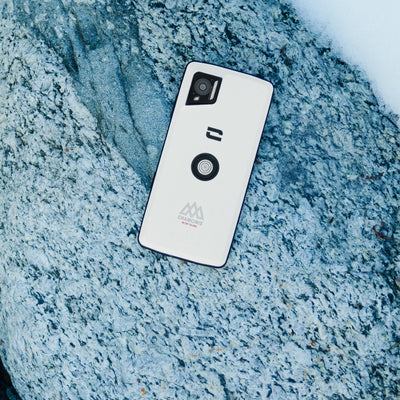
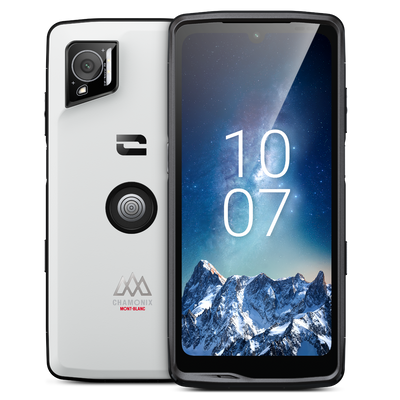
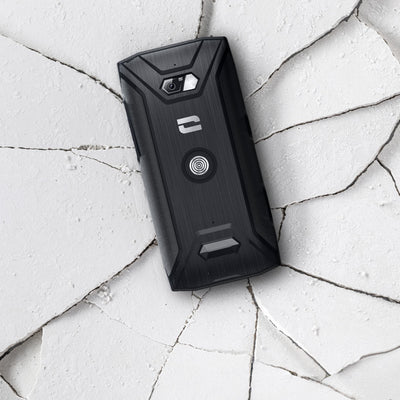
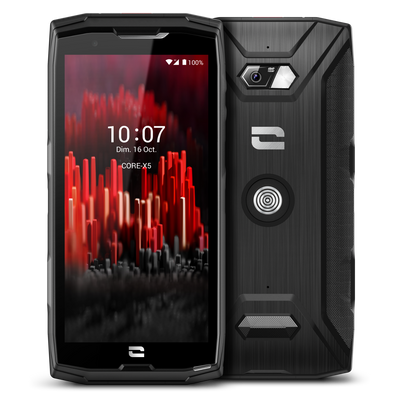
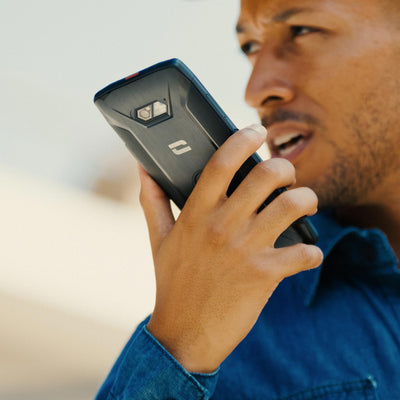
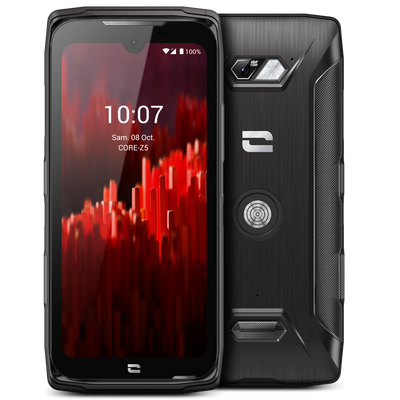

A bulkier design, reinforced edges, an imposing size but also some prejudices. Rugged smartphones often carry an unfair reputation: that of being less "high-tech," less sophisticated, less powerful than consumer models. The aesthetic comparison with the latest ultra high-end models is not always favorable to rugged smartphones at first glance, although at Crosscall, we do pay particular attention to their aesthetics.
What you see, however, does not say much about what happens under the hood. And even less about what happens after two, three, or five years of intensive use in the field.
At Crosscall, we design smartphones that really last. And that perform in conditions where most consumer models give up. It's time to debunk some misconceptions.
Rugged smartphones: are they really less powerful than classic models?
The power gap between rugged smartphones and classic models has significantly narrowed in recent years. The real difference? A rugged smartphone is designed to maintain its performance over time and in extreme conditions : temperatures, shocks, humidity, where a consumer smartphone can fail at the first field tests.
Raw power vs sustainable performance: what's the difference?
There is a fundamentally different philosophy behind the design of a consumer smartphone and that of a rugged smartphone. Two visions, two promises.
On the consumer smartphone side, the race for specs is constant. Every year, a new model with a faster chip, a brighter screen, a photo/video camera offering promises worthy of professional imaging.
These devices are nevertheless designed to meet everyday uses: browsing social networks, streaming videos, managing calendars and emails. They are powerful, undeniably, but only for a short time, with a 2-year manufacturer warranty, and signs of weakness often appearing much earlier. Slowdowns, battery fatigue, aging components... the life cycle is short. We are therefore facing a real "Fast Tech" phenomenon: consumable, rreplaceable and not very compatible with a sustainability approach.
On the rugged smartphone side, and more specifically Crosscall smartphones, the philosophy is radically different. The goal is not to be the most powerful at a given moment, but to stay performant over time, whatever the conditions. When designing a terminal with a 5-year warranty, battery included, and committing to provide OS updates for 7 years, you have to think differently. The smartphone must absorb future software evolutions, support increasingly advanced business applications, and continue to operate perfectly at -20°C as well as in the height of summer under the sun. This is what is called a terminal “future proof”.
And because a rugged smartphone must last, it is also designed to be repairable: accessible, available, and replaceable components. Repairability is not just a CSR statement, it is a design imperative.

The key components of a high-performance rugged smartphone
Processor and RAM: for seamless smoothness
The computing power of a smartphone is primarily measured by its processor and RAM. In this regard, rugged smartphones have caught up with and often exceeded expectations.
The latest Crosscall models integrate Qualcomm chips 8-core chips specially selected for their application areas and efficiency:
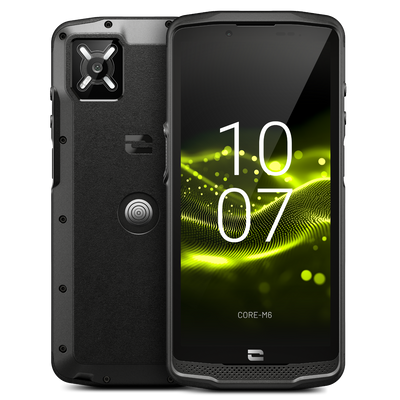
The CORE-M6 features the Qualcomm Dragonwing™ QCM4490, a chip designed for the most demanding industrial environments.
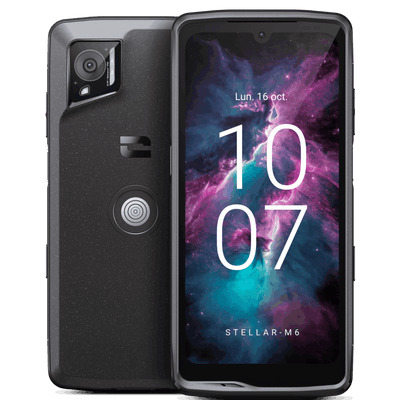
The STELLAR-X5s is equipped with the Qualcomm QCM5430 FP2, offering optimized computing power for versatile and intensive uses.
These processors are paired with up to 8 GB of RAM on the most powerful configurations.
Why is it important? Because in the field, a professional does not use just one application at a time. They juggle between a navigation app, warehouse management software, a Push-to-Talk communication tool, and potentially a barcode scanner or a payment terminal connected via Bluetooth.
These chips are also ready for AI uses in professional environments, image recognition, real-time data processing, automation of field tasks that require increasing computing power. A bug, a freeze, a slowdown at the wrong moment: in a warehouse or during an emergency intervention, that is not acceptable.
Battery life: the performance that really lasts
Rugged smartphones are also often the smartphones with the best battery life. And yet, it is also one of the most misunderstood points.
The CORE-M6 features a battery of 4,950 mAh, giving it a actual autonomy of 80 hours.
But the raw battery capacity is not the only indicator. What really matters is its resilience over time and in extreme conditions. Crosscall batteries are designed to operate from -20°C to +60°C, temperatures that make most consumer smartphones give up within minutes.
Even more: Crosscall batteries are designed to maintaining 100% of their charging capacity for 1,000 cycles. That's two to three times more than the average consumer smartphone. And the icing on the cake: they are included in the 5-year warranty. No unpleasant surprises after 18 months.
If you want to maximize your battery life, ofDiscover our 5 tips to preserve your battery.
Photo and video quality: the field does not exclude precision
Another misconception: the rugged smartphone would take poor quality photos. A thing of the past.
The STELLAR-X5s and the STELLAR-X5s Chamonix-Mont-Blanc feature a 50 MP SONY main sensor as well as a 120° wide-angle sensor, with 4K video capture at 60 frames per second.
But image quality is not limited to sensors. It also depends on the computing power available for real-time processing. The STELLAR-X5s and STELLAR-X5s Chamonix-Mont-Blanc offer:
- A hyper stabilizer for sharp videos, even in full action
- Slow Motion and Hyperlapse modes to capture your adventures from a cinematic angle
- Image processing power that rivals "consumer" models

The STELLAR range from Crosscall proves that durability and image quality are not mutually exclusive. Quite the opposite.
Why choose a rugged smartphone for your intensive uses?
For professionals on the move
In the sectors of logistics and transport, or even retail, the professional smartphone has become a central work tool. It runs complex business applications, manages real-time data flows, and must remain available from the start to the end of a workday, or even a night shift.
The power of Qualcomm processors embedded in Crosscall devices guarantees smoothness without compromise for demanding multitasking. Compatibility with dedicated accessories: barcode scanner X-SCAN, remote microphone X-COMM, Bluetooth remote control X-COMMAND allows extending uses without complicating the toolchain.

And preparation for professional AI uses ensures the device remains relevant as business software solutions evolve.
For outdoor enthusiasts
Ultra-precise and reliable GPS even in low coverage areas, extended battery life for multi-day outings, photo quality worthy of the name: Crosscall smartphones meet the demands of outdoor sports enthusiasts without sacrificing performance. Whether you are a hiker, mountaineer, cyclist, or water sports practitioner, your data, memories, and communications remain in good hands.
For sustainable daily use
This may be the most universal argument: a Crosscall smartphone does not slow down after two years. It does not need to be replaced due to a drained battery or a chip outdated by new applications. Designed to last thanks to its 5-year warranty, battery included, it represents a sensible investment for your budget and for the planet.
Comparison: how does Crosscall combine durability and technology?
Criterion |
Consumer smartphone |
Crosscall rugged smartphone |
Computing power |
High immediate power,
optimized for consumer uses |
Resilient power, maintained over time and in extreme conditions
|
Battery life |
1 day of standard use |
Up to 80h of real autonomy, stable from -20° to +60°C
|
Battery lifespan |
Visible degradation from 500 cycles |
100% capacity maintained for 1,000 cycles, 5-year warranty
|
Technology |
Fast tech: annual renewal
ranges, 2-year warranty
|
Future proof: 5-year warranty, battery included, OS updates for 7 years, manufacturer spare parts available for 10 years
|
Usage conditions |
Indoor, controlled conditions,
daily use |
Outdoor, extreme conditions, intensive and multi-professional uses
|
Warranty |
2 years manufacturer
|
5 years, battery included
|
Repairability |
Limited, often components
inaccessible
|
Designed to be repaired, parts available and accessible
|
Business applications |
Consumer use
(social networks, streaming...) |
Professional multitasking, field AI, usage extensions (scanner, PTT...)
|
Our selection of high-performance rugged smartphones
FAQ: Everything you need to know about the power of rugged smartphones
Is a rugged smartphone really as powerful as a regular smartphone?
Yes. Modern rugged smartphones include 8-core processors and up to 8 GB of RAM, fully capable of running heavy business applications, intensive multitasking, and AI tools. The difference is no longer in raw power but in the resilience of that power over time and under tough conditions.
Why is the battery life of a rugged smartphone superior?
Rugged smartphones feature high-capacity batteries up to 4,950 mAh at Crosscall, specially designed to withstand extreme temperatures and maintain performance over 1,000 charge cycles. Result: up to 80 hours of real autonomy, with no compromise.
Is the photo quality of rugged smartphones comparable to consumer models?
On the Crosscall STELLAR range, yes. The STELLAR-X5s features a SONY 50 MP sensor, a 120° wide angle, 4K 60FPS video, and a hyper stabilizer. The onboard computing power allows high-quality real-time image processing, even in full action.
What does it mean for a smartphone to be "future proof"?
A future-proof smartphone is designed to remain relevant for several years: OS updates guaranteed for 7 years, a chip powerful enough to handle software evolutions, repairable and available components. At Crosscall, this translates into a 5-year warranty and a design that anticipates tomorrow’s uses.
Can a rugged smartphone replace several professional tools?
Absolutely. Crosscall smartphones can replace up to 5 devices in one: barcode scanner (X-SCAN), walkie-talkie (Push-to-Talk Button / X-COMM), desktop computer via docking station (X-SPACE), payment terminal, and of course a professional smartphone. This is a key argument to reduce equipment costs and simplify field usage.